Learn more about Good Shepherd Rehabilitation Hospital, a destination for recovery for stroke, brain injury, spinal cord injury and complex medical rehabilitation.
We believe even the greatest challenges can be the building blocks of limitless possibilities. Because when you start with good, great is never far behind.
Home / Careers / Certified Nursing Assistant (CNA) Training Program
Certified Nursing Assistant (CNA) Training Program
An intensive, paid CNA training program approved by the PA Department of Education
The Good Shepherd Long-Term Care Nursing Aide Training and Competency Evaluation Program (NATCEP) prepares you to sit for the National Nurse Aide Assessment Program (NNAAP) competency examination.
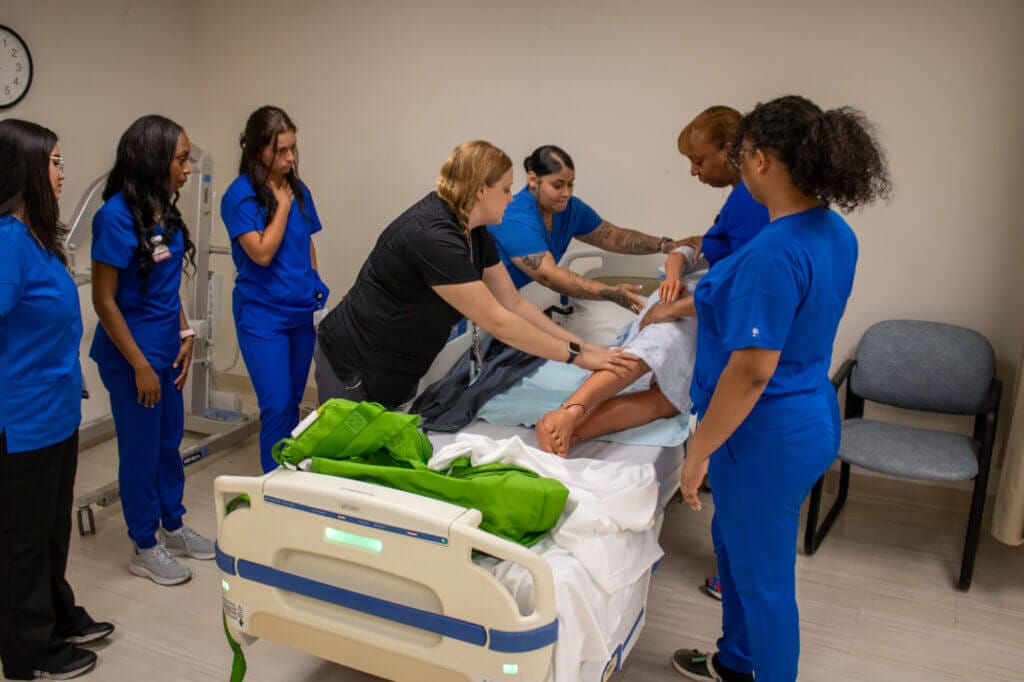
Good Shepherd’s intensive, paid, 120.5-hour course for certified nursing assistants (CNAs) is approved by the Pennsylvania Department of Education and covers all required curriculum for certification.
Candidates must be at least 18 years old and have a high school diploma or GED.
We have completed all interviews for the January 2027 class.
Good Shepherd’s next CNA class will be in April 2027. Interview dates and times will be posted once they’re available.
Key information to know:
The program is Monday through Friday from 7 a.m. to 3:30 p.m.
After completing the CNA program, candidates will be hired for an evening shift (3-11:30 p.m.) CNA position at one of Good Shepherd’s two long-term care facilities.
Interested applicants must be able to work evening shift.
When choosing your interview date and time, please consider choosing where you would ideally like to work at Good Shepherd’s two long-term care locations after completing the program.
Candidates may have the opportunity to shadow after their interview, based on availability; plan to stay one hour after your interview just in case.
Both locations are home to long-term care residents who live with severe disabilities, such as spina bifida, traumatic brain injury, multiple sclerosis, quadriplegia, cerebral palsy or muscular dystrophy.
We use cookies to give you the best experience when using our website. With your permission, we also set performance and functionality cookies, analytics cookies, advertising cookies and social media cookies. You can click "Accept All" if you are happy for us to place cookies (you can always change your mind later). For more information please see our Cookie Policy.