Why Choose Us
Learn more about Good Shepherd Rehabilitation Hospital, a destination for recovery for stroke, brain injury, spinal cord injury and complex medical rehabilitation.
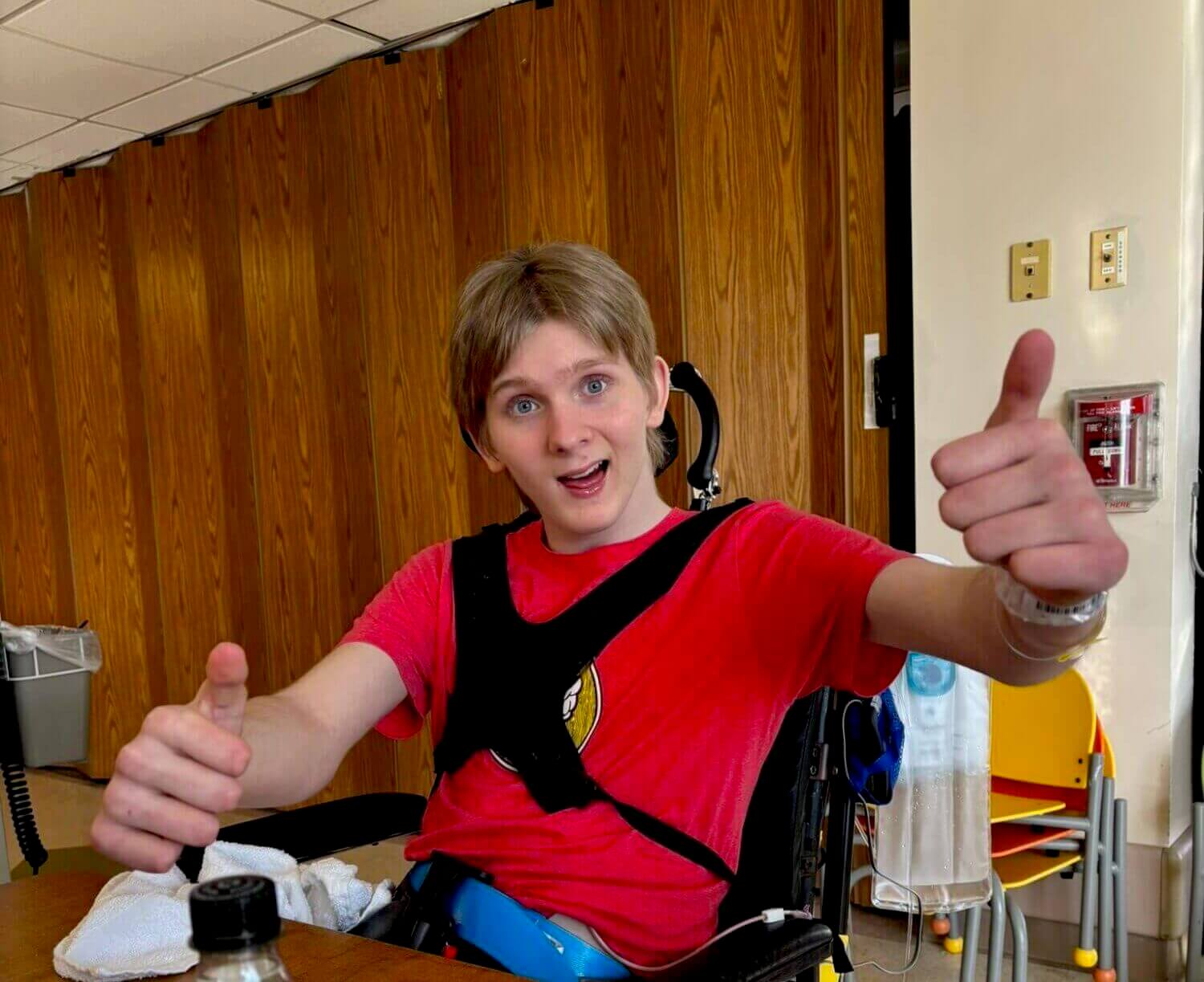
Sixteen-year-old Anthony Kruzick arrived at Good Shepherd Rehabilitation Hospital Pediatric Unit in Bethlehem unable to speak or follow commands. He couldn’t do much more than open his eyes.
Months earlier, a train collided with a pickup truck at a railroad crossing. Anthony was a passenger in that truck.
After the traumatic accident, Anthony underwent emergency surgery at Grand View Hospital, where he received additional care for more than a week. He then transferred to Penn Presbyterian Hospital in Philadelphia to further recover from emergency surgery. After a month, Anthony transferred to Children’s Hospital of Philadelphia (CHOP), where he continued to stabilize. When it came time for the next phase of care — intensive inpatient rehabilitation — his medical team recommended Good Shepherd’s pediatric hospital at 2855 Schoenersville Road.
The teenager’s family, based in Boyertown, toured Good Shepherd and felt confident it was the right place for Anthony to receive care for Disorders of Consciousness (DoC). Patients with DoC have a prolonged, altered consciousness that can be characterized by coma, vegetative state/unresponsive wakefulness syndrome or minimally conscious state after a traumatic or non-traumatic brain injury.
Because of DoC, when he transferred to the inpatient pediatric unit in mid-September 2025, Anthony arrived in a minimally conscious state.
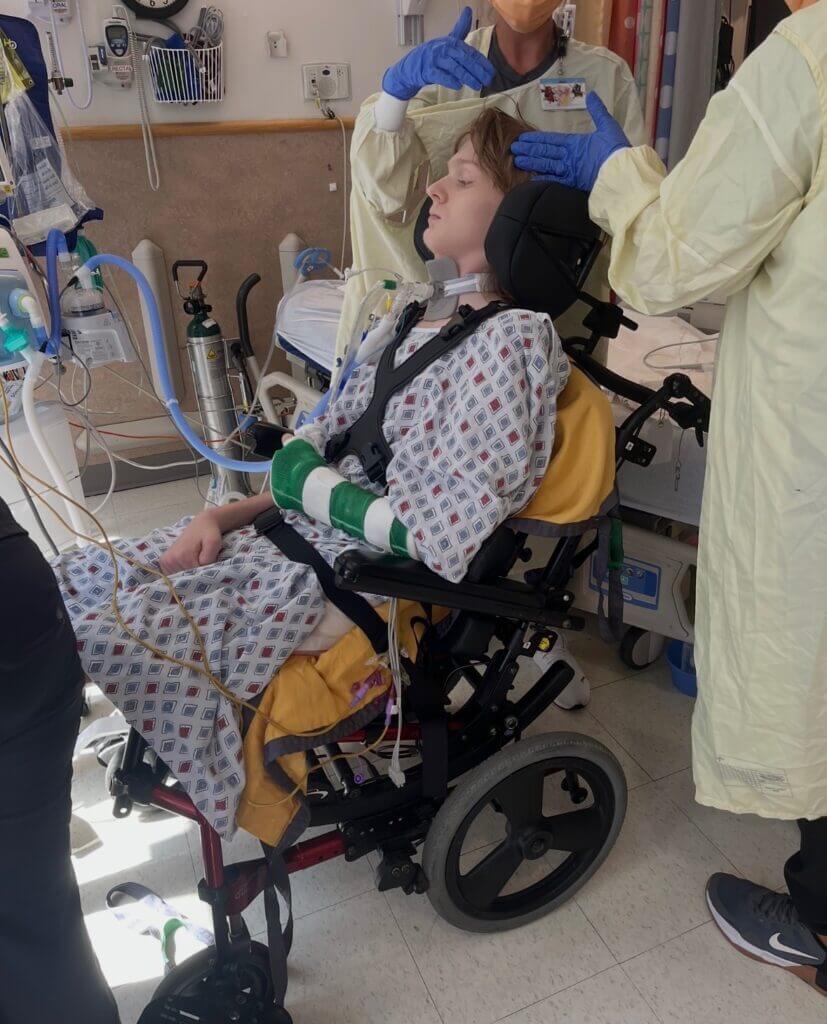
“At that time, Anthony wasn’t doing much more than opening his eyes and sometimes his mouth,” said his mother, April Murphy. “He wasn’t talking. He wasn’t following commands.”
At Good Shepherd, Anthony began a comprehensive rehabilitation program that included physical, occupational, recreational and speech therapies, all in coordination with Kimberly Kuchinski, MD, MPH, Medical Director of the Good Shepherd Pediatric Unit.
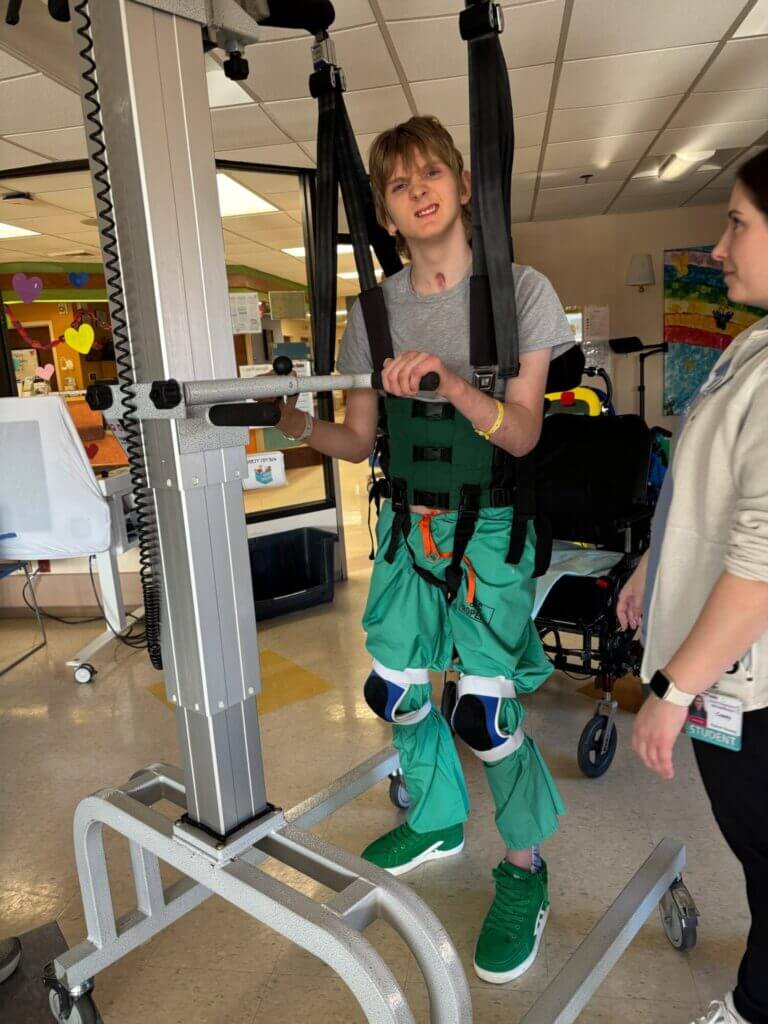
His rehabilitation began slowly, with his care team focusing on stretching and range-of-motion exercises. As Anthony progressed, they helped him sit at the edge of the bed and brought him to a standing position using a tilt table, which helps with balance and weight-bearing. He also began using a functional electrical stimulation (FES) bike to activate muscles and support neurological recovery.
April believes the FES bike played a key role in jump-starting her son’s progress — physically and cognitively. In fact, Anthony became the first patient to use an FES bike donated by Good Shepherd Women’s Giving Circle. In December, he attended the group’s presentation of the new bike to the pediatric unit.
Anthony’s recovery unfolded at different speeds. While his physical movement improved steadily, his speech took longer to return. Still, his progress continued. The care team ultimately recommended he remain in inpatient rehabilitation through February 2026, rather than transitioning home earlier with outpatient therapy.
The intensity and structure of Good Shepherd’s program have helped Anthony meet major goals and his strength continues to improve. His tracheostomy tube is gone. He is relearning how to walk with a walker. He is eating independently so a feeding tube is no longer necessary.
“He has surpassed everyone’s expectations,” April said.
For Anthony’s family, the impact of the Good Shepherd Pediatric Unit extends beyond medical care, therapy sessions and technology. They found compassion, education and hope.
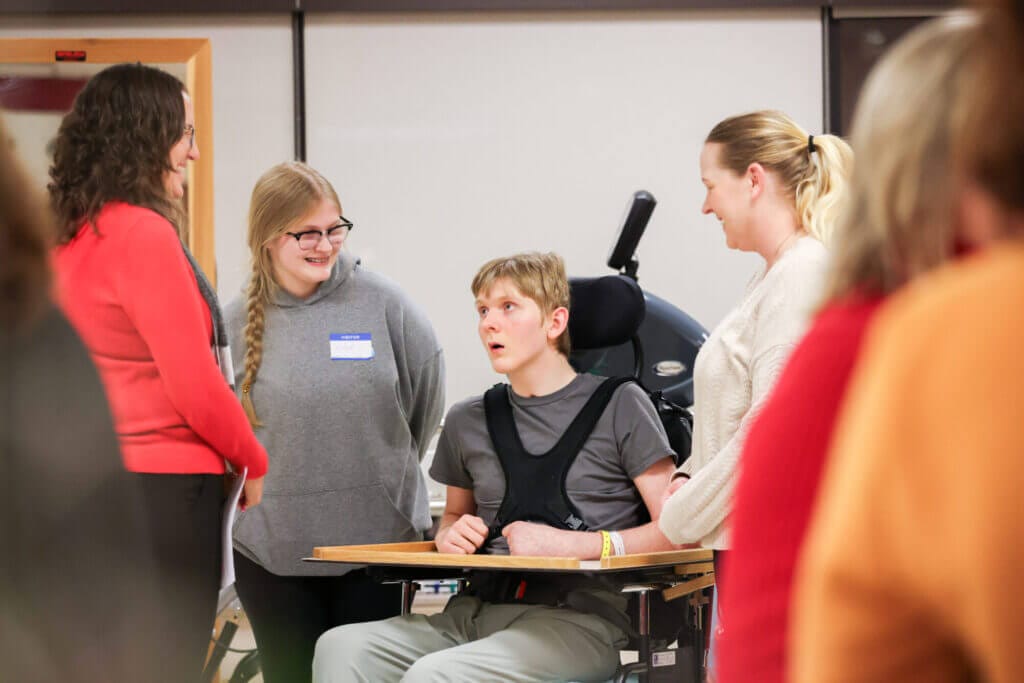
“The care Anthony has received at Good Shepherd has been amazing,” April said during a January interview. “Everyone is super helpful in educating us as a family and giving us the tools we need to bring Anthony home and provide the care he will need. I would recommend Good Shepherd to anyone who needs this level of intensive care.”
She also lauded the support received from staff members, including nursing assistant Emily Clinebell and nurse practitioner Anita Desai, CRNP, who were especially helpful to both Anthony and his family.
Anthony’s progress reflects the mission of the Good Shepherd Rehabilitation Hospital Pediatric Unit: providing specialized, intensive rehabilitation in a setting that supports not only healing, but hope. As he continues toward greater independence and a return to school, Anthony’s journey stands as a powerful example of what focused pediatric rehabilitation can achieve.
On Feb. 10, 2026, Anthony left the pediatric unit for his home in Boyertown. As they do with all pediatric patients who go home, the Good Shepherd team held a ceremonial bubble parade to celebrate Anthony and wish the entire family well.