Why Choose Us
Learn more about Good Shepherd Rehabilitation Hospital, a destination for recovery for stroke, brain injury, spinal cord injury and complex medical rehabilitation.
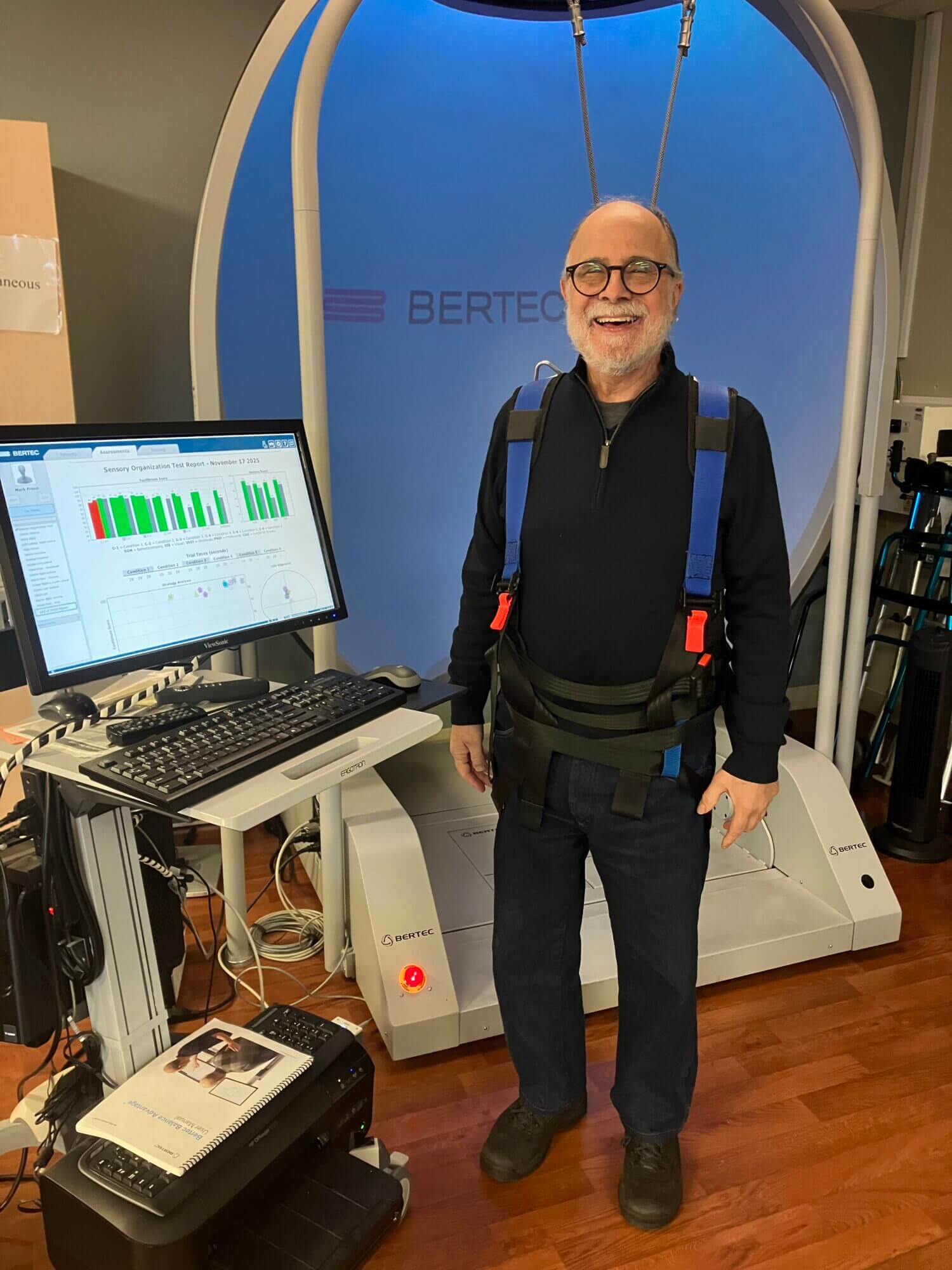
ALLENTOWN, Pa. — “They see you as an individual.”
That’s how Mark Freeh, 69, describes the team at Good Shepherd Rehabilitation.
For Mark, personalized outpatient therapy helped him regain physical and cognitive function he often believed would never return.
“Like many people, I am dealing with a complex set of issues in several areas of my body. The therapists at the Hyland Center in South Allentown see all these isolated conditions as various parts of a whole. This holistic approach continues to make a huge difference in my life as I cope with these conditions daily,” Mark said. “I’ve been suffering with debilitating chronic fatigue, brain fog and body pain since March of 2022. Several years of testing revealed cognitive decline but no diagnosis for this complex set of symptoms.”
Having previously worked with physical therapist Liz Troese for back problems, Mark turned to her when his balance issues began to worsen.
“Liz is the best and noticed something,” he said. “She asked me to close my eyes and walk. I thought I was walking straight, but I was actually veering 45 degrees to the left.”
Liz recommended vestibular testing, which revealed a 35% weakness in Mark’s right inner ear — a condition called unilateral vestibular hypofunction.
That discovery led Mark to physical therapist Hayley Cook of Good Shepherd’s Vestibular Rehabilitation Program. Hayley used advanced tools like infrared video goggles and video head impulse testing to evaluate Mark’s balance and eye movements. She developed a personalized vestibular rehabilitation program focused on improving Mark’s gaze stability, sensory integration, and dynamic balance. Exercises involved moving his head while focusing on a target, walking across spongy pads to challenge balance, and strengthening his legs and core.
“Good Shepherd has the highest level of technology,” Mark said. “But what really made the difference was how Hayley explained everything. I asked tons of questions, and she always had answers. She was transparent, patient and so knowledgeable. They look at the patient, figure out what you need and make it happen.”
“It wasn’t just about vestibular therapy — it was about living again.”
Mark Freeh
Vestibular rehabilitation helped Mark’s left ear compensate for the deficit in his right ear. His balance improved and he reduced his risk of falling. As a result, he is again enjoying walking in parks and nature settings.
Mark had another deeply personal goal. He explained to Hayley during his vestibular therapy how he couldn’t play on the floor with his grandson. Once down, he could not get back up.
Mark’s therapy team met the challenge and created a leg and arm strengthening plan. After nearly two months of conditioning, Mark met his goal, got up from the floor and went several steps farther: he danced at his son’s wedding with his grandson to an ABBA song — an unforgettable moment.
“It wasn’t just about vestibular therapy — it was about living again,” he said.
Mark’s progress didn’t end there. He transitioned to work with Good Shepherd’s Vision Rehabilitation Program — to treat his double vision and upon the advice of his neurologist — to address several areas of his cognitive decline.
Occupational therapists Devin Darby and Dea Halteman have been utilizing visual remediation strategies including neuro-visual postural therapy, visual motor and coordination tasks and sensory system and balance integration techniques and technology.
Testing revealed a complex set of issues, including difficulty coordinating eye movements as a team, reduced depth perception and reduced awareness of ambient visual input. His brain fog and peripheral vision have improved which helped him regain the confidence to drive on highways again — even Interstate 78, which he had avoided for years.
“Plus, I now write and think clearly again,” said Mark, who is finishing a book of poetry and short narratives he plans to self-publish. “That’s a gift I didn’t think I’d get back.”
“Good Shepherd gave me back my balance, my clarity and my life.”
Mark Freeh
Through his journey, Mark learned healing is not only about medicine or technology, but also about being seen.
“When you go through health problems, one of the hardest things is feeling invisible,” he said. “You talk to doctors who listen but don’t relate. With the team at Good Shepherd, it’s different. They see you. Once you’re seen, you feel motivated and hopeful again.”
Mark describes the experience as humbling and inspiring.
“Being at Good Shepherd a few times a week, I see people with all kinds of challenges working hard to get better,” he said. “It makes you grateful. It makes you work harder.”
Today, Mark continues to build strength and share his story to help others who face vestibular or sensory challenges.
“I’m extremely grateful,” he said. “Good Shepherd gave me back my balance, my clarity and my life.”